Soil Compaction in School Grounds: Where Does Rainwater Go?
Explore soil compaction, safe school-ground observations, rainwater infiltration and practical ways to protect roots.
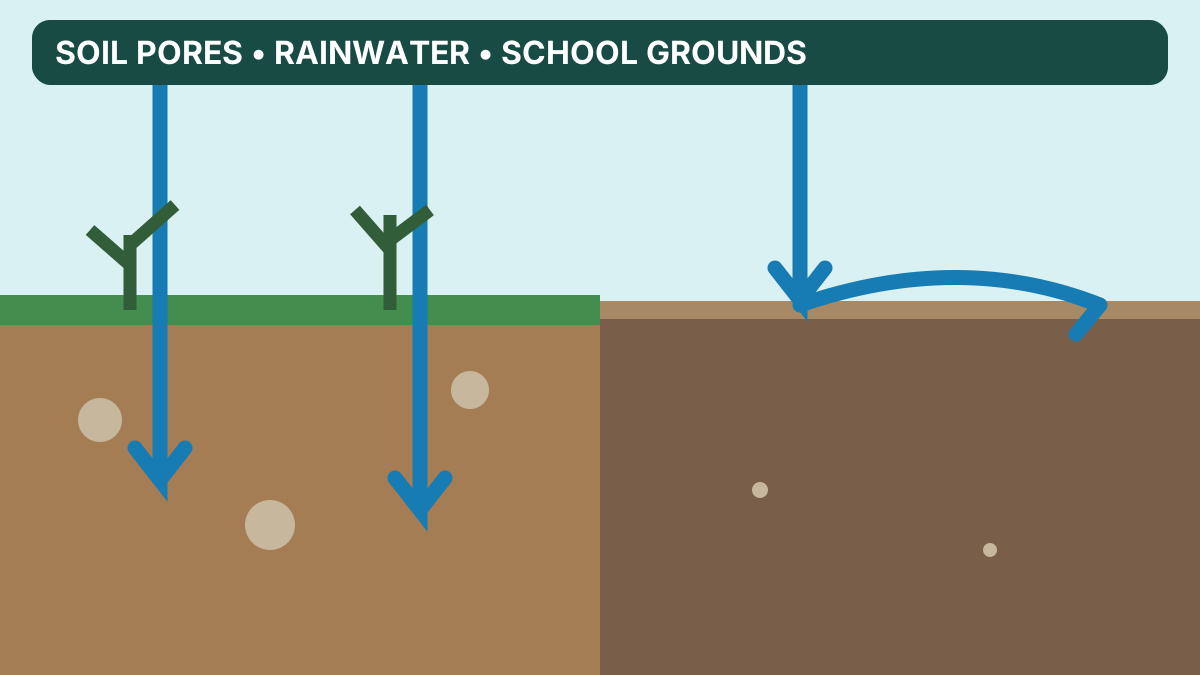
What is soil compaction?
Soil contains mineral particles as well as pores that carry air and water. Repeated footsteps, vehicles and pressure on wet ground can reduce these spaces. The effect varies with texture, moisture, vegetation and previous land use; a hard surface alone is not proof of compaction.
Why does it matter?
Fewer connected pores may slow water entry and make it harder for roots to grow. Puddles after rain, bare patches and struggling plants can be clues, but none proves compaction. Clay-rich soil, slope and drainage can produce similar observations.
Observe safely at school
Obtain permission from teachers and school management. Choose three small areas: vegetated, heavily walked and lightly used. At the same time after rain, record standing water, ground cover and visible footprints. Do not publish faces, licence plates or precise student location data.
A simple classroom comparison
With permission, place equal quantities of loose surface soil from different areas into three identical clear containers. Slowly add the same amount of water and record the time taken to drain. This container exercise is not a field infiltration measurement; sampling, packing and initial moisture can change the outcome.
Interpret the evidence carefully
Record date, recent rainfall, estimated moisture, traffic intensity and observations. Repeat at least three times. Avoid claiming that foot traffic caused every difference: soils may have different clay contents. Describe results as observations rather than a diagnosis.
Practical improvements
Limit heavy traffic on wet grass and identify suitable walking routes. Discuss locally appropriate ground cover and mulch with a qualified adult. Students should not dig trenches, deep-aerate soil or alter drainage; those interventions require school approval and professional assessment.
A seven-day learning plan
Day 1: select sites. Day 2: prepare an anonymous observation sheet. Days 3–5: track rainfall and surface conditions. Day 6: compare observations. Day 7: propose a low-cost route that protects vulnerable patches. If there is no rain, extend the observation period rather than forcing a result.
Sources and limitations
FAO identifies compaction as a physical soil-health concern that can restrict water and nutrient movement. Its infiltration guidance explains why texture, structure and moisture matter. This article is educational, not an engineering or agricultural diagnosis.