Classroom Daylight and Glare Observation: A Practical School Guide
A safe, low-cost classroom activity for mapping daylight, noticing glare and testing reversible improvements.
Why observe daylight?
Daylight influences how a classroom is used, but brighter is not automatically easier to see. Window position, work surfaces and direct sun must be considered together.
Safety and scope
Never look directly at the sun or climb onto furniture to inspect windows. Electrical fittings and permanent shades are for qualified staff. This exercise does not replace a professional lighting assessment.
Map the classroom
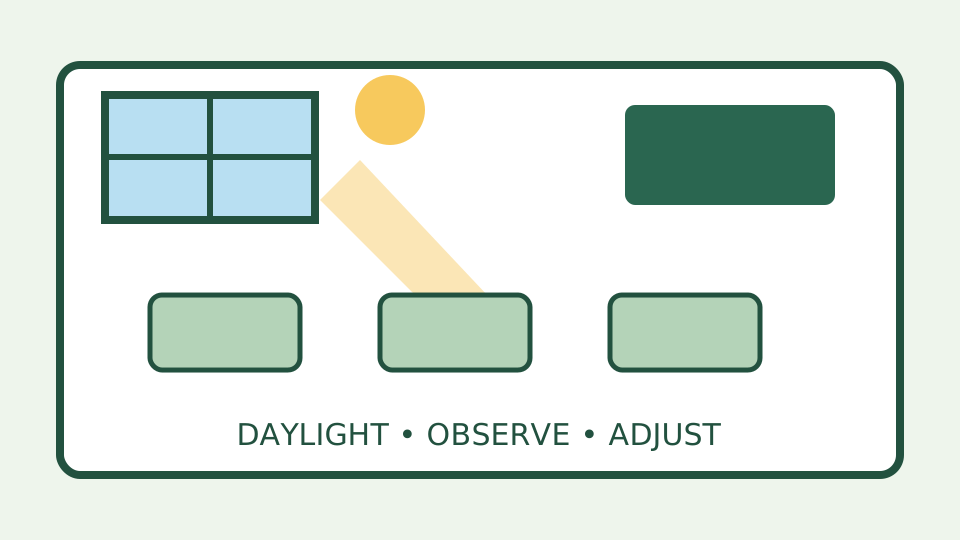
Sketch windows, boards, screens and seating without recording pupils' names. Note where direct sunlight, shade or reflections appear at different times of day.
Notice glare and reflections
Can everyone read the board? Are screens reflecting windows? Record observations as 'comfortable', 'difficult' or 'uncertain', not as medical diagnoses.
A five-day observation log
Observe at comparable times over five school days. Record weather and whether blinds were open. Avoid conclusions based on one unusually sunny or cloudy day.
Low-cost adjustments
With teacher approval, test seating positions, screen angles or the use of existing blinds. Keep exits clear and protect accessibility and fire safety.
Review findings together
Compare before-and-after notes and invite different perspectives. Refer structural changes to school management and competent professionals.
Sources
The US Department of Energy explains daylighting as part of building design, including control of sunlight and glare.