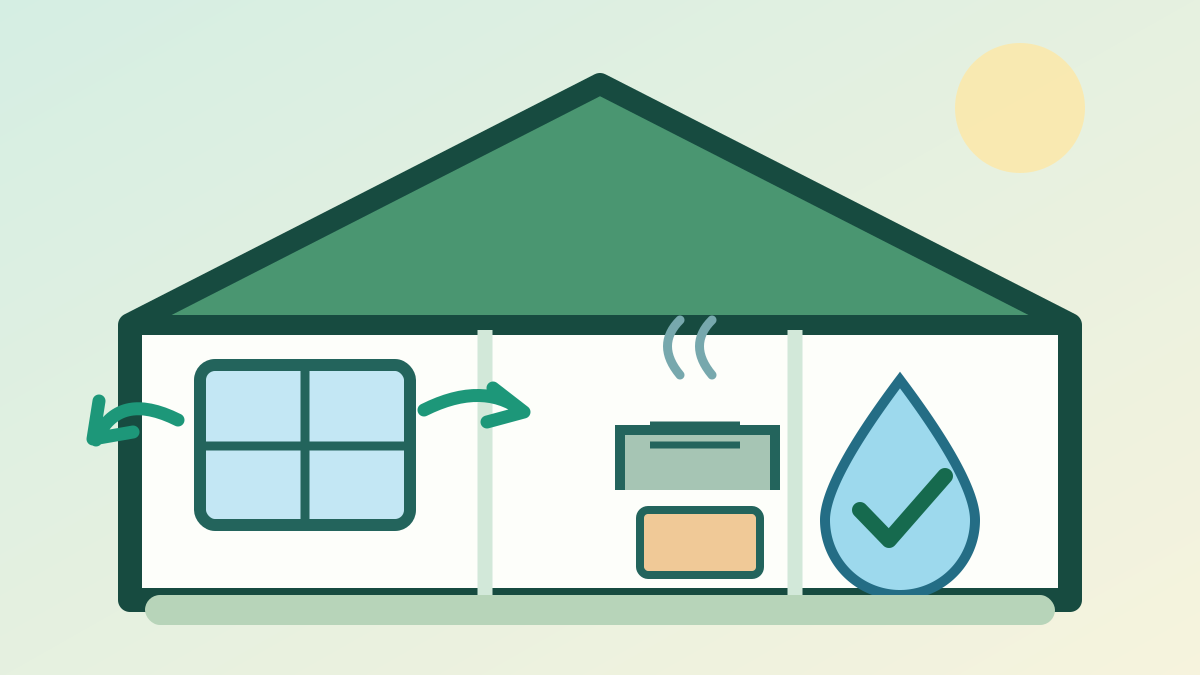
What affects indoor air?
Indoor air contains pollutants brought in from outside as well as particles and gases from cooking, fuel-burning appliances, tobacco smoke, candles, cleaning products, paint, some building materials and dampness. Several sources may operate at once. A single odour or sensor reading cannot describe every possible risk.
Map the activities in your home: when do steam, smoke, strong smells or condensation appear, and in which rooms? Observe changes while cooking, after cleaning and around cold windows in the morning. Removing or reducing a pollution source is often a more effective first step than trying to clean contaminated air afterwards.
Ventilation that responds to conditions
When outdoor air is suitable, opening windows or using kitchen and bathroom exhaust fans that vent outdoors can help dilute indoor pollutants. But keeping windows open is not always wise during wildfire smoke, heavy traffic pollution or severe dust events. Adapt ventilation to outdoor conditions and official local advice.
Check whether your cooker hood actually exhausts outdoors or merely recirculates air through a filter. Outdoor exhaust is especially useful when frying or doing other particle-producing cooking. Do not block air vents; if your building uses mechanical ventilation, follow its operating and maintenance instructions.
Moisture, mould and leaks
The key to preventing recurring mould is identifying and fixing the moisture source. Leaking pipes, condensation around windows, roof defects and persistently wet surfaces may need more than surface cleaning. Address water damage promptly and investigate why the affected area stays damp.
The US Environmental Protection Agency generally recommends indoor relative humidity of 30–50%. This is guidance, not a medical diagnostic threshold; climate and building design also matter. Use a basic hygrometer to observe trends, exhaust bathroom moisture and seek qualified help for persistent mould or substantial water damage.
Cleaning products and volatile chemicals
Sprays, solvents, fragrances, paint and some furnishings can release volatile organic compounds. Use only as much product as needed, follow label precautions and provide appropriate ventilation during activities that may release pollutants. Consider whether a fragrance is necessary rather than masking another problem.
Never mix household cleaning chemicals: combinations can release dangerous gases. Keep containers closed and store products away from children. A label such as 'natural' or 'green' does not by itself demonstrate that a product is harmless to breathe.
Cooking, heating and carbon monoxide
Fuel-burning equipment can release carbon monoxide and other combustion pollutants if installed or maintained incorrectly. Arrange appropriate inspections of appliances and flues; never use outdoor charcoal grills or outdoor-only fuel heaters inside. A carbon monoxide alarm is an important safeguard but does not replace maintenance.
Carbon monoxide is colourless and odourless. If an alarm sounds or exposure is suspected, leave the building for fresh air and contact local emergency services; do not re-enter until it is declared safe. This guide cannot replace emergency advice or medical assessment.
Filters and portable air cleaners
Portable air cleaners can help reduce certain airborne particles, but they cannot remove the source and may not capture all gases. Compare clean air delivery rate (CADR) with room size, ongoing filter costs and the manufacturer's maintenance requirements before buying.
Avoid devices that intentionally generate ozone. Check heating and cooling system filters on the recommended schedule. Filtration is a supporting measure, not a substitute for repairing leaks or using combustion appliances safely.
A seven-day home air check
Day 1: list likely sources room by room. Day 2: check the kitchen hood and bathroom exhaust. Day 3: look for condensation, damp patches and leaks. Day 4: review cleaning-product labels and reduce unnecessary sprays.
Day 5: check filter replacement dates and heating service records. Day 6: create a ventilation routine informed by outdoor air conditions. Day 7: record what changed and refer persistent leaks, mould or combustion-safety concerns to qualified professionals.
What measurements can and cannot tell you
A low-cost CO₂ monitor can sometimes help track changes in ventilation, but it does not measure every pollutant. A PM2.5 sensor does not detect carbon monoxide, radon, mould or all volatile chemicals. Do not treat a single reading as a health diagnosis.
Opening windows is not an automatic solution when outdoor air is polluted. Radon concerns, extensive mould, recurring smoke or possible carbon monoxide exposure may require specific testing or professional assessment. Conditions vary across buildings, climates and occupants; this is general educational guidance.
Sources and scope
This educational guide draws on public institutional resources; local rules, outdoor conditions and building characteristics vary.