Rainwater Harvesting at School: Safe Collection and Learning
Explore safe rainwater collection, non-potable uses, maintenance and a classroom observation project.
What is rainwater harvesting?
Rainwater harvesting means collecting rainfall from suitable surfaces for a defined purpose. At school, it is primarily an opportunity to understand local water cycles and explore ways to reduce demand for treated drinking water where appropriate. Climate, roofing materials, infrastructure and regulations vary by location.
Make the water cycle visible
Map where rain falls, where puddles form and where water can soak into the soil. Runoff from sealed surfaces can transport litter and pollutants. Start with observation and a risk assessment rather than immediately installing equipment.
Why roof runoff is not drinking water
Roof runoff can contain bird droppings, dust, metals and substances released by roofing materials. Do not use untreated harvested rainwater for drinking, food preparation, handwashing or personal hygiene. Clear-looking water is not proof that it is safe.
Planning a collection system
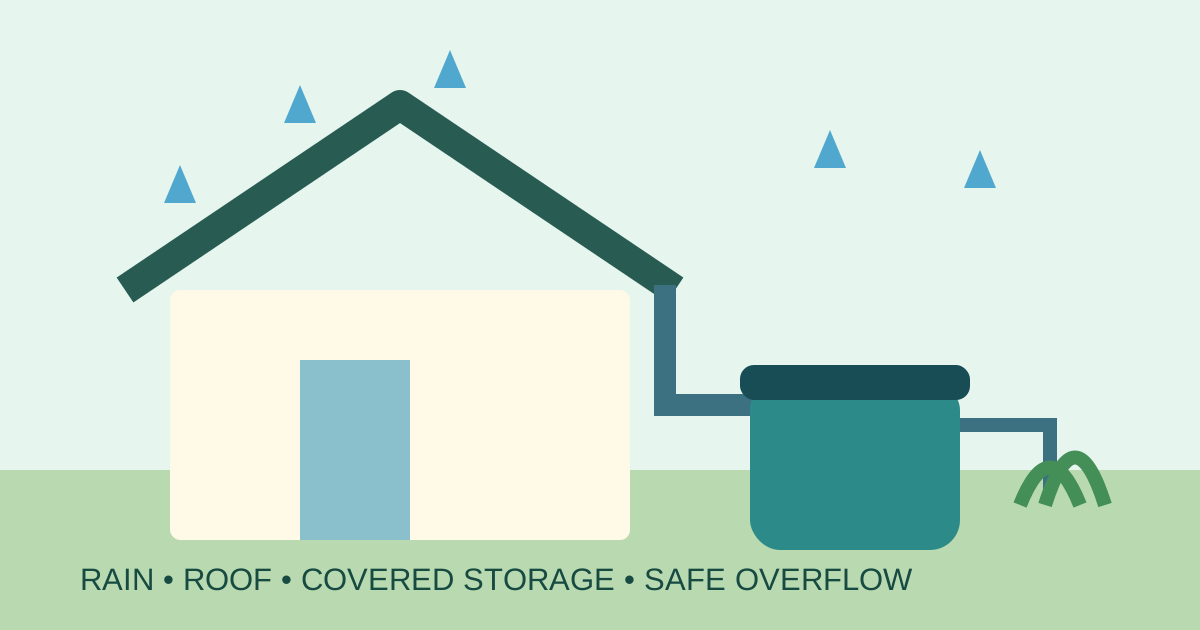
With school approval and qualified technical oversight, evaluate rainfall, roof area, first-flush diversion, filtration, overflow routing and the intended end use. Never connect a non-potable system to the drinking-water network. Local rules and public-health requirements take priority.
Safe storage and maintenance
Tanks must be secured, covered, labelled and inaccessible to children. Protect openings against mosquito breeding and inspect gutters, screens and overflow lines regularly. Assign a named maintenance lead and keep a written inspection schedule.
A 40-minute student observation
Students can record rainfall with a rain gauge, mark runoff paths on a school map and compare puddling on two different surfaces. They must not handle contaminated runoff or enter tanks. Record observations with teacher supervision and avoid generalizing from a single storm.
A seven-day learning plan
Day one: draw a site map. Day two: review permissions and safety. Day three: record rainfall. Day four: compare surfaces. Day five: discuss suitable non-potable uses. Day six: draft a maintenance checklist. Day seven: present evidence-based suggestions to school leaders.
Measure outcomes responsibly
An initial estimate in litres is rainfall (mm) × catchment area (m²) × runoff coefficient. The coefficient depends on surface and losses, so this is only a planning estimate. Claim actual water savings only when permitted use and measured volumes support the claim.
Sources / Quellen / Kaynaklar
US EPA — Rain barrels; CDC — Collecting rainwater and your health. Check local regulations and professional guidance before installation.