Schoolyard Shade and Urban Heat: Planning Cooler Outdoor Spaces
A practical, safe schoolyard investigation of shade, surface temperature and equitable heat adaptation.
Why heat matters in schoolyards
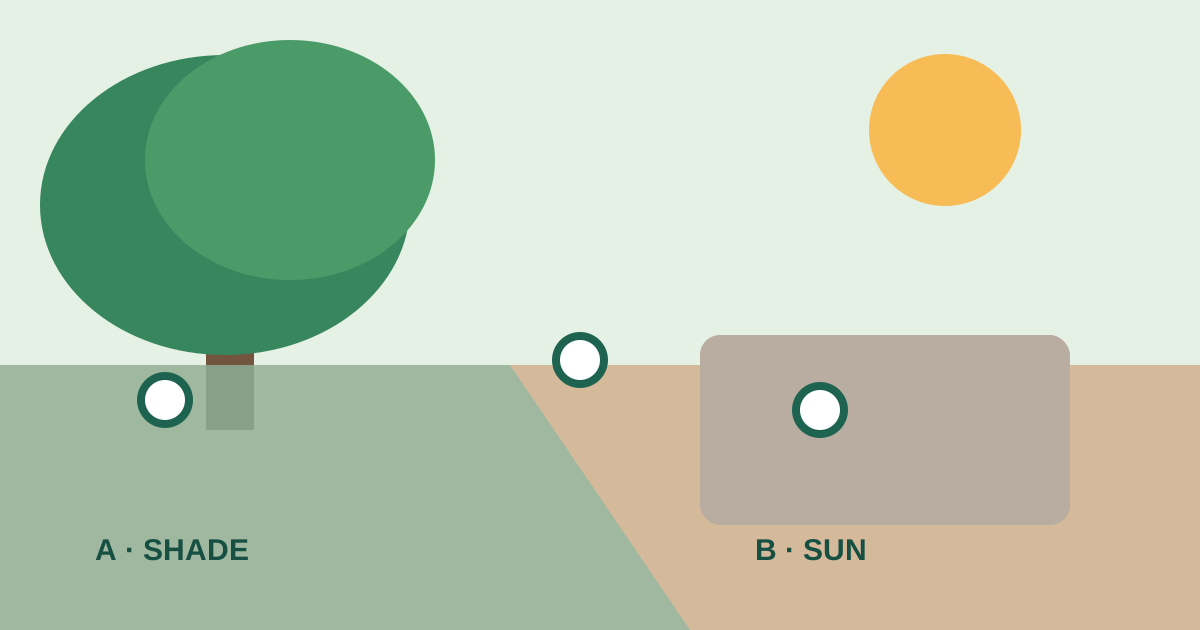
Asphalt, concrete and dark surfaces can absorb and store solar energy. Where vegetation and shade are limited, pupils may experience greater heat exposure during hot weather. Conditions vary across a single schoolyard with changes in wind, shade and materials; one reading cannot represent the entire site.
Surface temperature is not air temperature
An infrared thermometer measures a surface, not the air children breathe. For comparable air readings, use the same shaded instrument, measurement height and time. Keep sun-exposed and shaded surface readings in separate columns; do not confuse either with an official heat warning.
A safe observation protocol
With teacher supervision, identify three places: exposed pavement, shaded pavement and a planted area. Observe at comparable times and weather conditions. Never send pupils outside during dangerous heat to collect data. Weather alerts, drinking water, breaks and the school's safety policy take priority.
Record and compare evidence
Log date, time, cloud cover, wind, material, shade status, surface reading and—if properly measured—shaded air temperature. Repeat across days. Note instrument uncertainty and differing surface reflectivity. Avoid publishing pupils' faces or personal information in photos.
Trees, canopies and ground materials
Trees and appropriately designed canopies can reduce direct solar radiation. Tree species, rooting space, maintenance, water needs and local climate all matter. Light-colored surfaces can reduce some surface heating but may create glare or reflected exposure. Consider permeable materials alongside stormwater management.
Accessibility and fairness
Design for younger children, wheelchair users and anyone who needs rest, not only for active games. Accessible routes, shaded seating, water and supervision should be considered together. Obtain permission and expert advice before permanent changes, construction or planting.
A seven-day action plan
Day 1: map the yard. Day 2: agree a safe method. Days 3–4: collect comparable observations. Day 5: chart the findings. Day 6: discuss feasible shade and water options. Day 7: present a short evidence-based proposal to school leaders. Pupils should not perform electrical, construction or planting work unsupervised.
Interpret results carefully
A reading does not establish that a location is definitively safe or unsafe. Interpret differences with measurement uncertainty, weather, time and how the area is used. Combine observations with official local heat guidance and school safeguarding procedures.
Sources and further reading
US EPA — Heat Islands · WHO — Heatwaves. Official reference pages; live link and claim verification required before publication.