Textile Dyeing and Water Pollution: The Hidden Water Story of Clothes
How textile dyeing affects water, why wastewater treatment matters, and practical ways to reduce clothing impacts.
Where does a shirt's colour come from?
Fabric colour comes from dyes and finishing processes. Depending on the production method, dyeing and finishing require water, energy and processing chemicals. Colour alone does not tell the whole environmental story: equipment, water reuse and wastewater treatment also matter.
Why is water used?
Washing, dyeing, rinsing and finishing can all use water. Consumption varies with fabric, machinery and process design. Be cautious about universal claims that every shirt requires an identical number of litres: figures without clear boundaries can mislead.
Does coloured water always mean the same risk?
Visible colour is not a reliable safety test. Water that looks clear may still contain dissolved substances, while colour intensity by itself cannot establish toxicity. Meaningful assessment requires appropriate testing, discharge standards and evidence about treatment performance.
How does treatment work?
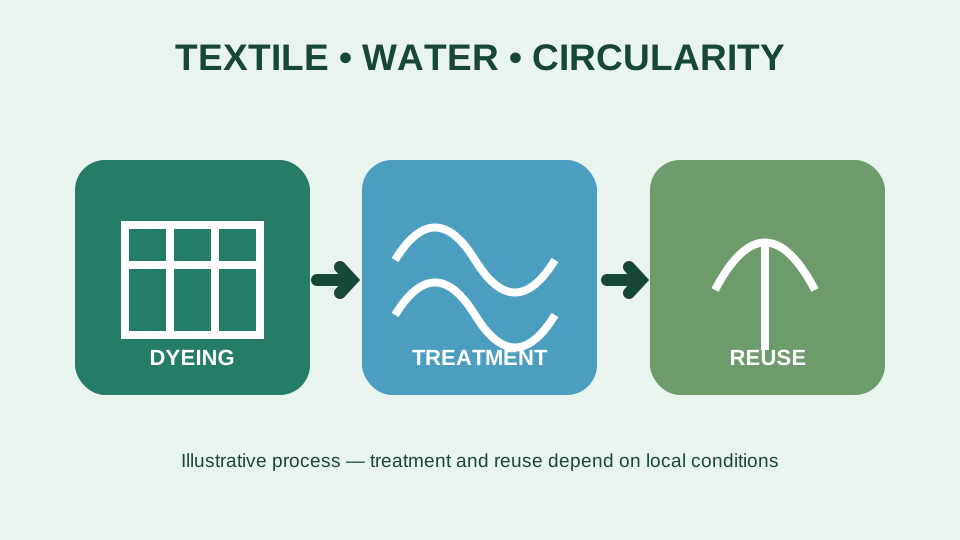
Facilities can prevent pollution at source, reuse suitable process water and apply physical, chemical or biological treatment. No single method removes every dye and contaminant equally well. Residual sludge must also be managed responsibly.
What can consumers do?
Use clothes longer, repair damage and consider second-hand options before buying new items. When shopping, look for specific, verifiable environmental information. Words such as 'green' or 'natural' are not sufficient evidence on their own.
A safe classroom activity
Prepare three cups of water coloured with food colouring and compare their appearance. Explain that these are not industrial wastewater samples. Discuss why colour alone cannot establish whether water is safe. Do not use industrial dyes, solvents or actual wastewater in class.
Common misconceptions
Not all synthetic dyes have the same impacts, and natural dyes are not automatically harmless. A useful assessment considers materials, manufacturing, energy, water, how long a garment is used and its end-of-life handling.
A seven-day action plan
Day 1: inventory wearable clothes. Day 2: identify repairs. Day 3: check evidence behind one product claim. Day 4: read a reliable source. Day 5: discuss appearance versus pollution. Day 6: explore sharing and second-hand options. Day 7: record one unnecessary purchase avoided.