What compost is—and what it is not
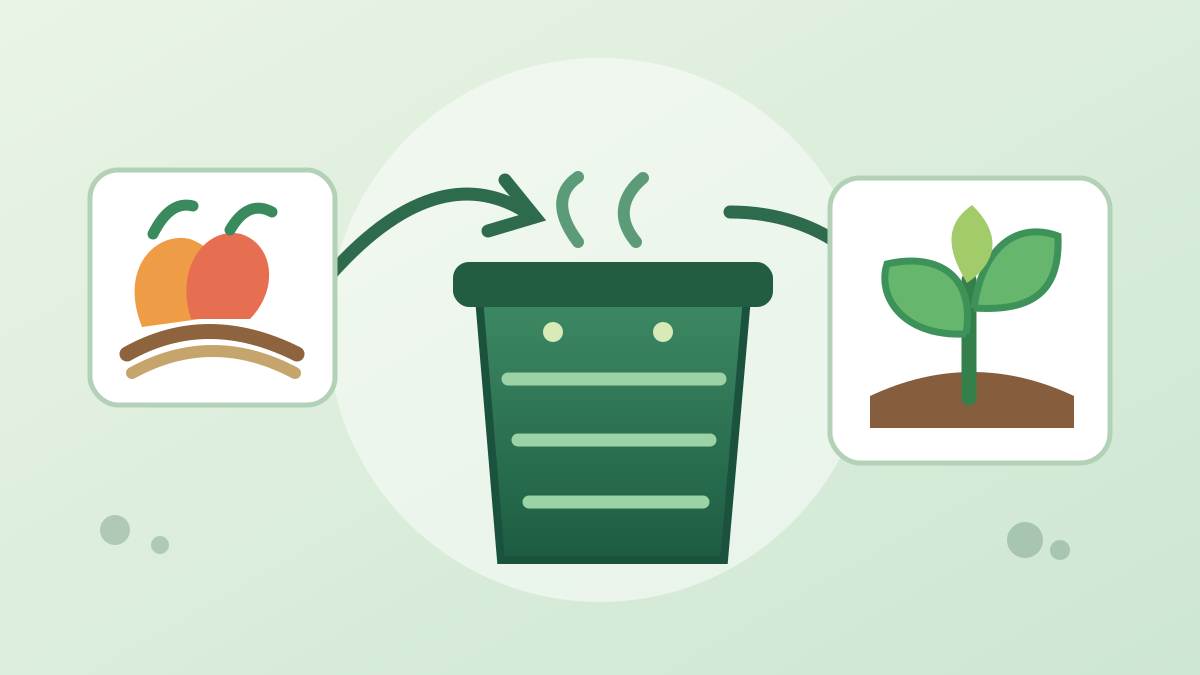
Compost is a soil amendment produced when microorganisms break down suitable organic matter in a managed process with oxygen. Not every pile of rotting food is compost. A waterlogged, airless container can smell unpleasant, whereas finished compost is usually dark, crumbly and earthy-smelling.
Composting does not excuse wasting edible food. First plan purchases, store food properly, use leftovers and share safe surplus. Compost mainly the unavoidable, inedible scraps. Our food-waste prevention guide explains why prevention comes first.
Browns, greens, moisture and oxygen
Four things make a basic aerobic system work: nitrogen-rich greens such as vegetable peelings, coffee grounds and fresh grass; carbon-rich browns such as dry leaves and shredded uncoated cardboard; moisture; and air. The US Environmental Protection Agency suggests starting with roughly two to three parts browns to one part greens by volume. Treat this as a practical starting point, not a universal laboratory formula.
The mix should feel like a wrung-out sponge, not a dripping wet cloth. Gently turning material or leaving air spaces can improve oxygen supply. Smaller pieces usually decompose faster, but tightly packed material may restrict airflow.
What belongs in a home compost bin?
Suitable starter materials include raw fruit and vegetable scraps, crushed eggshells, coffee grounds with paper filters, dry leaves and plain shredded cardboard with tape removed. Check whether tea bags contain plastic or staples before adding them.
Avoid meat, fish, bones, dairy, fats, pet waste, diseased plants, chemically treated wood and glossy or coated paper in a conventional home bin. They may introduce pests, odours, contaminants or pathogens. A product labelled 'compostable' may require industrial conditions; it is not automatically suitable for backyard composting. Local municipal collection programmes may accept different materials.
Seven steps to get started
1. Check local organic-waste services before buying equipment. 2. Choose a ventilated bin protected from rain and rodents. 3. Add a base layer of dry leaves or shredded cardboard. 4. Add a modest amount of suitable kitchen scraps. 5. Cover scraps with browns. 6. Check moisture and airflow regularly. 7. Stop adding fresh material to one section and allow it to mature.
A full bin is not necessarily ready to spread on plants. Depending on temperature, particle size and management, maturation may take months. Avoid applying large amounts of unfinished material around delicate seedlings.
Troubleshooting odours, flies and moisture
Rotten smell? The pile may be too wet or lack oxygen: mix gently and add dry browns. Fruit flies? Bury fresh peels under a dry layer and check the lid. Slow progress? Look for low temperatures, dryness or oversized pieces. Rodents? Exclude meat and dairy and secure the bin physically.
Take hygiene seriously, particularly indoors: prevent leaks, wash hands after handling material and avoid breathing dusty or mouldy material at close range. People with respiratory sensitivities should take extra care.
Apartment and school alternatives
People without a garden can explore vermicomposting, which requires an appropriate worm species and a properly maintained bin. Do not simply collect random garden worms. Community gardens and municipal food-scrap collection are other options. Countertop appliances that merely grind and dry scraps do not, by themselves, produce mature compost.
Schools can run a four-week observation project: record the weight of unavoidable scraps, the mix of browns and greens, moisture and odours. Never waste edible food for an experiment. Compost may need much longer than four weeks to mature, so the learning goal should be careful process management rather than a guaranteed finished product.
When is compost ready and how is it used?
Finished compost is typically dark, crumbly and earthy-smelling, with few recognisable food scraps. Mixed into garden soil or applied as a thin surface layer, it can improve soil structure and water retention. It is not automatically a complete potting mix for every plant. If material still smells sharp or contains large identifiable scraps, allow further maturation.
Be precise about climate claims. Keeping organic waste out of oxygen-poor disposal can help reduce methane pressure, but outcomes depend on collection, transport and management. Avoid unsupported claims such as a fixed carbon saving for every bucket.
Sources and scope
Educational guidance for small-scale aerobic composting. Industrial processing and local collection rules may differ.