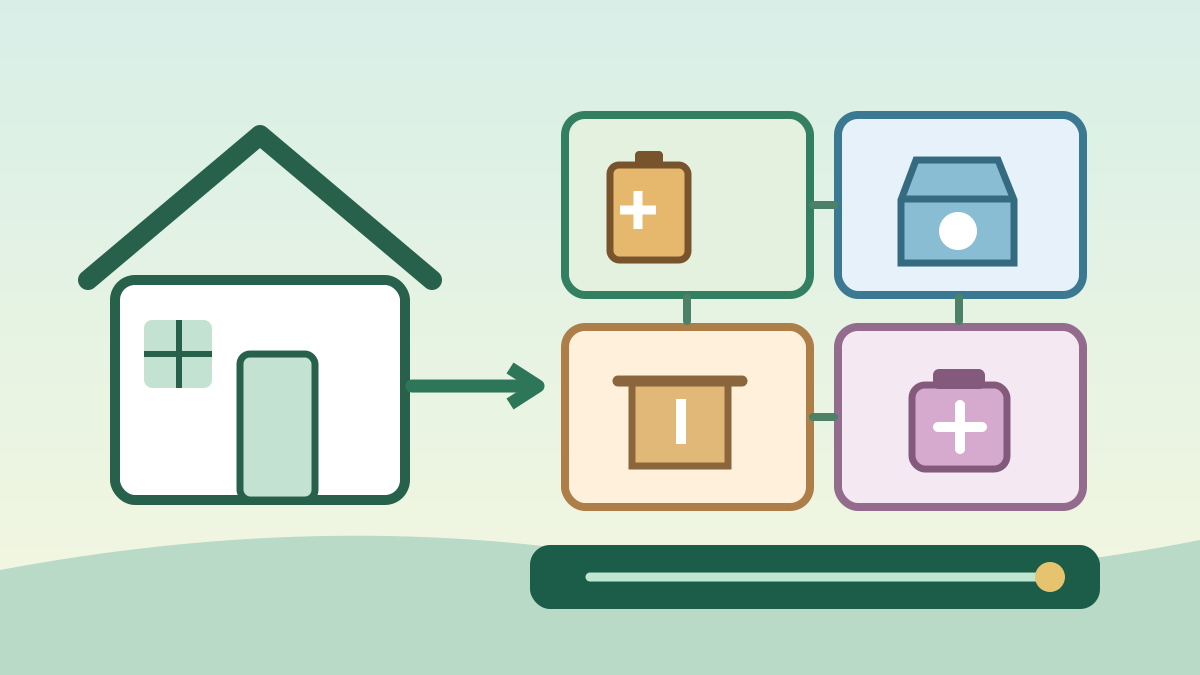
What counts as household hazardous waste?
Leftover paint, solvents, strong cleaners, pesticides, motor oil and certain batteries can require special handling because they may ignite, corrode, react or contain harmful substances. The US Environmental Protection Agency (EPA) warns against pouring these materials into drains, onto the ground or into stormwater systems. Read the product label, hazard symbols and local collection guidance together rather than judging by the container alone.
Not every paint or cleaner is classified in the same way: water-based and solvent-based products may follow different local routes. If the label is missing, do not guess the contents or transfer the material to a drink bottle. Under the EU Waste Framework Directive, Member States were required to establish separate collection for hazardous household waste fractions by January 2025; specific collection arrangements still vary by location.
Identify five practical waste streams
Start with batteries and rechargeable cells. Next are paints, varnishes, thinners and solvents; strong cleaning products and drain openers; pesticides and vehicle fluids; and unwanted or expired medicines. These are distinct streams, not ingredients for one mixed collection box. Medicines often require a dedicated take-back scheme rather than a general household chemical collection event.
Flame, corrosion and environmental hazard pictograms are useful warning signs, but the absence of a pictogram does not mean an item can go in ordinary recycling. Local authorities may offer battery drop-off points, household chemical collection days and separate medicine return schemes. Check which exact items are accepted before leaving home.
Never mix, pour or improvise
Do not combine leftover cleaning products or solvents to reduce the number of containers. Incompatible substances may release harmful gases, generate heat or ignite. Do not pour chemicals into toilets, sinks, soil or surface drains, and do not put containers holding chemical residues into an ordinary packaging recycling bin. EPA notes that even apparently empty containers may retain hazardous residues.
Whenever possible, keep known products in their original, sealed, labelled packaging. Never use food or beverage containers for storage. If a container is corroded, bulging or leaking, do not attempt home neutralisation or an improvised repair; ask your local hazardous waste service for instructions. In an immediate spill, smoke or fire emergency, move away and contact emergency services.
Handle batteries with extra care
Lithium-ion, lithium-metal, lead-acid and many rechargeable batteries should not go into household rubbish or ordinary recycling bins. EPA recommends specialised collection or battery take-back facilities. A battery built into a device should not be forced out if removal is unsafe; ask an electronic waste collection programme how to hand over the whole device.
Some battery types need exposed terminals individually insulated against short circuits, following the manufacturer's and collection service's instructions. Never puncture, crush or recharge a swollen, hot, damaged or leaking battery. Ask the collection operator for specific handling guidance rather than dropping a damaged battery into a routine public battery box.
Medicines and paints need different routes
Do not flush expired or unwanted medicines down a sink or toilet. Medicine collection arrangements differ by municipality and healthcare system. As one local example, Kadıköy Municipality in Türkiye reports medicine collection through designated family health centres and a municipal drop-off facility. That does not imply that every clinic accepts medicines in every town.
For paints, thinners, varnishes, pesticides and automotive fluids, contact your local council or authorised hazardous waste service. Describe the product and whether its packaging is intact. Acceptance of water-based paint can differ from oil-based paint. Never donate unidentified chemicals; where reuse is allowed, confirm that the product is safe, labelled, in date and suitable for its intended purpose.
Check the collection point before travelling
Find your local waste management office and state the precise item: for example, a lithium battery, solvent-based paint, a drain opener or unused medicines. Ask about opening times, quantity limits, whether damaged containers are accepted and how to transport them. A battery collection point may not accept chemicals, and some hazardous waste events exclude medicines or pressurised cylinders.
For transport, follow local instructions, keep containers upright and separated, and prevent leaks. Keep waste away from children, pets and heat sources; do not leave chemicals loose in a vehicle's passenger compartment. If a facility cannot accept an item, ask where it should go rather than leaving it beside a public bin.
Prevent waste before it appears
Buying only the quantity needed and selecting a less hazardous option where appropriate can prevent future hazardous waste. EPA encourages source reduction, but a 'natural' or 'green' label does not override safety directions. Use products only as instructed, and avoid accumulating old containers whose contents can no longer be identified.
For schools, campuses or apartment communities, coordinate any collection drive with the municipality or a licensed collection operator. Volunteers should not open containers, mix substances or invent disposal rules. Publish a clear list of accepted items, and record measured quantities accurately rather than claiming unverified recycling totals.
A seven-day household checklist
Day 1: Review cupboards and storage areas for child access. Day 2: List batteries, paint, cleaners and medicines with readable labels. Day 3: Identify damaged or unknown containers without opening them. Day 4: Locate local battery and hazardous waste services. Day 5: Confirm the separate medicine return route.
Day 6: Ask each collection point about packaging, transport and acceptance rules. Day 7: Hand over accepted items and adjust future purchases to avoid unnecessary stock. This is an educational checklist, not a substitute for professional hazardous-materials response. Seek qualified help whenever a product is leaking, reacting or cannot be identified.
Sources and local guidance
This is general environmental education. Local regulations, manufacturer warnings and authorised collection instructions take priority. It is not a substitute for hazardous-materials or medical advice.