School Rain Gauge and Rainfall Diary
A rainfall diary turns everyday weather into a local investigation. This guide helps schools collect meaningful observations while keeping safety and measurement limits in view.
1. Start with a clear question
Ask what pupils want to learn: Which days were wettest? Where does water collect in the playground? Explain that a few weeks of weather observations cannot establish a long-term climate trend.
2. Choose a safe location
With adult supervision, position the gauge on level ground away from roof runoff, branches and sprinklers. Never climb onto roofs or take readings outdoors during lightning or severe winds. Use a shatter-resistant container.
3. Understand the instrument
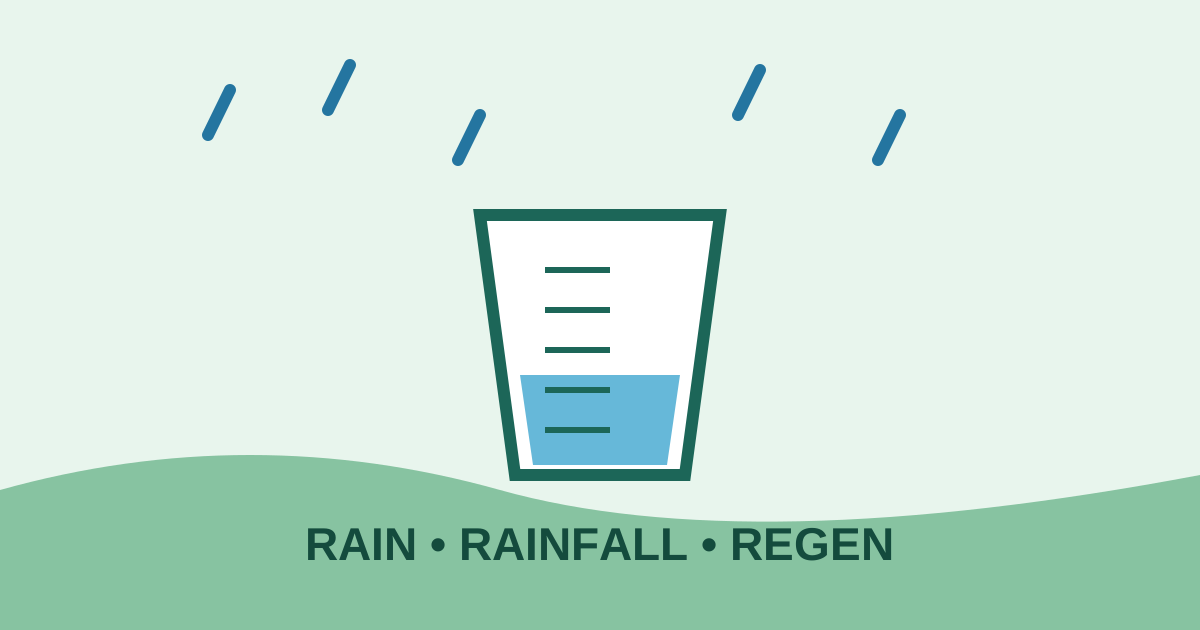
A purpose-made graduated rain gauge is best. A homemade container may require calibration; a ruler reading is not automatically equivalent to standard rainfall depth. Record rainfall in millimetres: 1 mm corresponds to one litre over one square metre.
4. Read at a consistent time
Choose the same observation time each day, including dry days. Read the scale carefully and empty the gauge afterwards. Mark missed weekend observations as missing rather than inventing daily readings.
5. Protect data quality
Record date, time, rainfall, observer and unusual conditions. If the gauge tips, overflows or fills with leaves, flag the reading as unreliable. Never treat missing observations as zero rainfall.
6. Make sense of the diary
Create a bar chart of valid daily readings and calculate weekly totals only when the period is sufficiently complete. Compare with a nearby official station, discussing differences in siting, timing and equipment.
7. Connect data to the school grounds
After rain and when conditions are safe, observe puddles, soil and planted areas. Discuss infiltration, drainage and permeable surfaces. A classroom rain gauge is not a flood-warning system.
8. Four-week classroom plan
Week 1: site selection and safety briefing. Week 2: daily observations and quality checks. Week 3: charting and comparison. Week 4: pupil presentations, uncertainty and maintenance planning. Keep pupils' personal details out of public datasets.